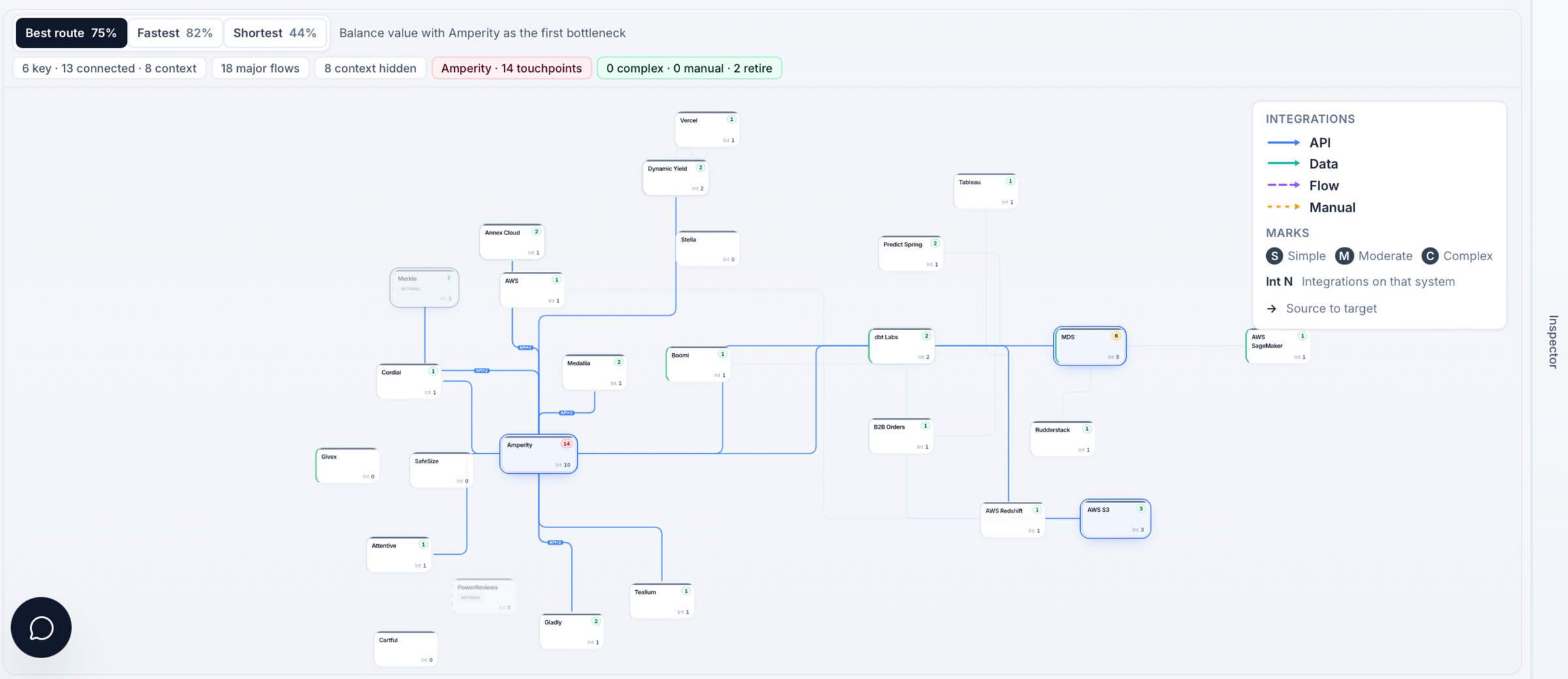
Application retirement
Test which applications can retire first, what they depend on, and how the sequence changes run cost and delivery risk.
Your enterprise is hard.
Your enterprise is a complex structure of applications, platforms, integrations, processes, investments, vendors, and people. Every transformation decision changes that structure—and the consequences are rarely isolated.
stuart models those consequences before you commit. Compare alternative paths, see hidden dependencies, and understand cost, risk, capacity, and time to value.
Make the decision in the model before you make it in the enterprise.
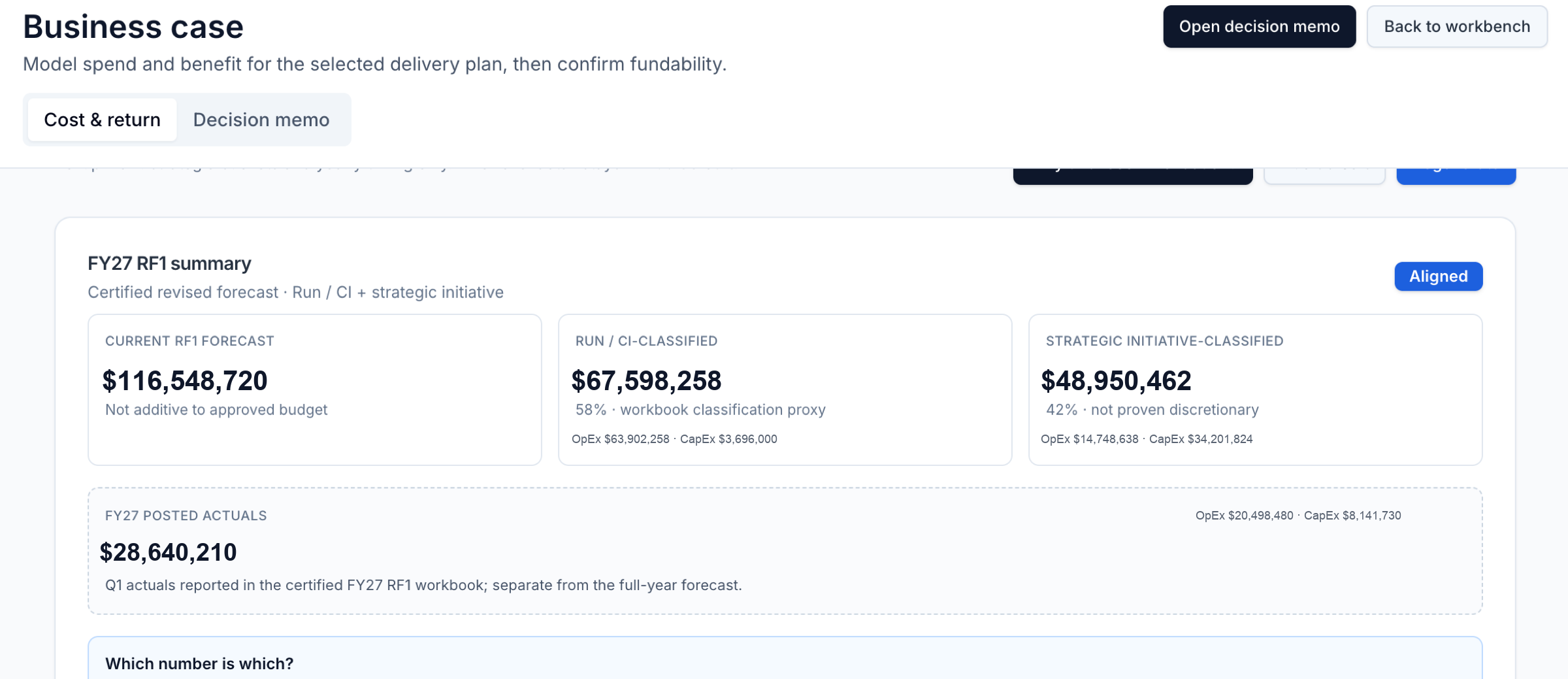
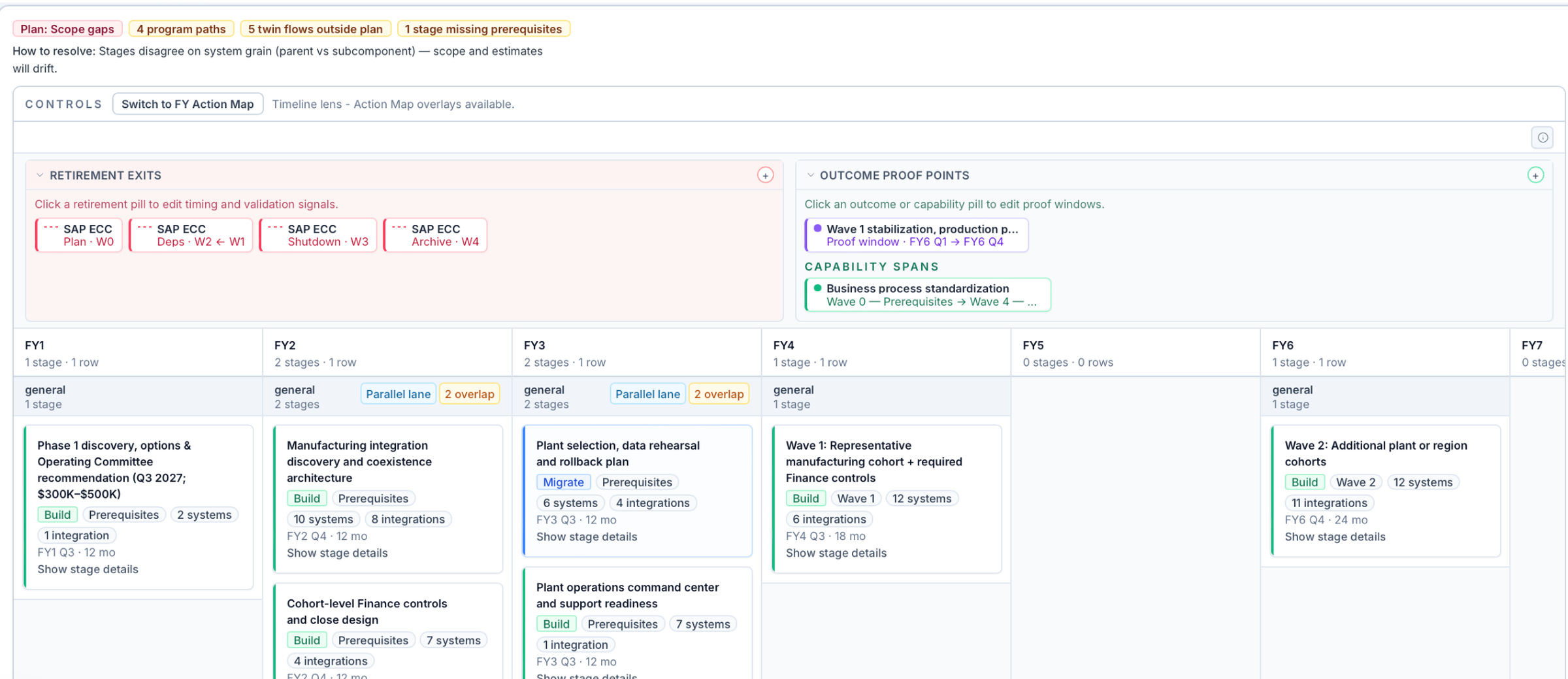
Illustrative product view and values—not a customer result or forecast.
Stop guessing.
Inventories tell you what exists. Spreadsheets capture assumptions. Presentations describe a preferred plan. None reliably show what will happen when multiple changes collide across technology, finance, operations, data, vendors, and people.
Information and assumptions remain separated across diagrams, plans, spreadsheets, and presentations.
Connect the evidence, test the sequence, expose consequences, and compare paths before committing.
Start knowing.
See what is carrying the load, what changes when it moves, and which sequence gives you the strongest path forward. Begin with one live retirement or modernization decision—not the entire estate.
Test which applications can retire first, what they depend on, and how the sequence changes run cost and delivery risk.
Compare migration and replacement paths before funding locks in architecture, capacity, and timing.
Expose the assumptions, uncertainty, dependencies, and capacity peaks behind a preferred modernization path.
Know what to do next.
“Live” does not mean a magic, continuously synchronized model. Data freshness, ingestion method, ownership, and manual enrichment are made explicit for each engagement.
Start with approved exports from architecture, application, finance, portfolio, and delivery systems. Record ownership, freshness, and gaps.
Create a governed decision model linking applications, dependencies, cost, capacity, timing, and the assumptions behind each scenario.
Change a sequence or assumption, see the effects, test sensitivity, and trace every output back to its source or owner.
Method and data
Every scenario output should resolve to source evidence, a named assumption, or an explicit human override. Missing and contradictory data stay visible rather than disappearing inside a score.
Record the origin, owner, date, and transformation applied to material inputs.
Allow accountable owners to change an assumption without hiding the original value.
Show which assumptions materially change cost, capacity, timing, or risk.
Preserve scenario versions, decisions, and approvals for later challenge.
Integration and automation coverage varies by source. Available ingestion, services-assisted onboarding, and any roadmap items are confirmed during pilot scoping—never implied by a logo wall.
Illustrative decision mechanics
A comparison is only useful when Finance, Architecture, and Delivery can challenge its inputs. The example below demonstrates the intended mechanics; it is not a customer result.
Illustrative scenario comparison
Values are deliberately illustrative. A real model must expose the source, owner, confidence, and calculation behind each one.
| Path | Investment | Time to value | Systems retired | Delivery risk | Payback |
|---|---|---|---|---|---|
| Technical upgrade | $42.6M | 36 months | 2 | High | No payback |
| Migrate and simplify | $38.2M | 30 months | 7 | High | Month 39 |
| Sequence retirement first | $31.4M | 18 months | 11 | Moderate | Month 27 |
Modernizes the core, but leaves redundant platforms and payback unresolved.
Improves the case, but compresses delivery risk into the migration path.
Reduces investment and brings value forward by changing the sequence.
Founding design-partner pilot
stuart is currently offered through a structured design-partner motion, not as self-service enterprise software. The engagement starts only after scope, safeguards, responsibilities, and success criteria are clear.
One consequential application-retirement or modernization-sequencing decision, bounded to an agreed portfolio or business area.
Approved system exports, an accountable executive sponsor, and working sessions with architecture, finance, and delivery owners.
A working decision model, compared scenarios, assumption and data-quality findings, and an executive-ready decision record.
Scope, success criteria, confidentiality, approved transfer methods, access, retention, deletion, timeline, and commercials are agreed in writing.
Stop guessing. Start knowing.
Start with a general use case. Confidential decision context and source data are discussed only after the right protections and transfer methods are in place.